LumenFINISHWORKS
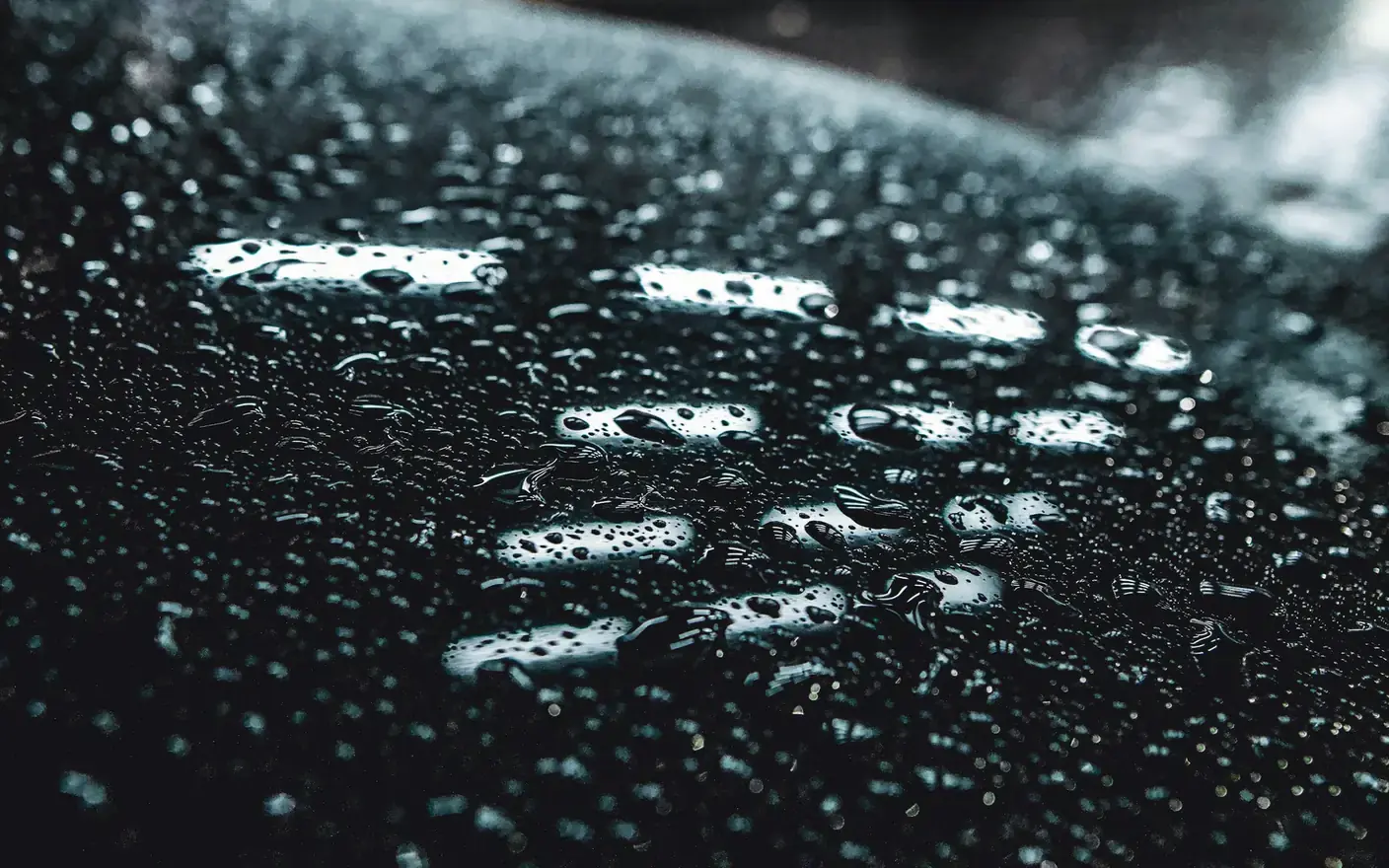
Macro view of tight water beads sitting on dark, protected paint
Stock photoWater on protected paint

Science behind the shine · Chemistry · Method

The chemistry of clean.

Lumen is built on a scientist's training, and every step of a Lumen detail has a reason you can measure. Here is what pH, salt, silica, iron, abrasives, enzymes, minerals, heat and suction actually do to a car, in plain English, with the sources listed at the bottom.

  1. 01The pH toolboxAcid · neutral · alkaline
  2. 02Road saltNaCl · MgCl2
  3. 03Ceramic coatingsSiO2 · contact angle
  4. 04Iron & clayFe3+ → Fe2+
  5. 05PolishingMeasured in µm
  6. 06Enzymes & soapsProtease · lipase
  7. 07Hard water & DICa2+ · Mg2+
  8. 08Steam200 °F+
  9. 09ExtractionDry in 24–48 h
  10. 10Headlights & UVPolycarbonate

01 · The pH toolbox

The right pH for each kind of dirt.

pH 0–14 · each step = 10×

pH is a logarithmic measure of acidity: every whole step is a tenfold change. Acids and alkalis dissolve different kinds of dirt, so one cleaner can't do everything well, and we don't ask it to.

Acidic washes for minerals. Hard-water spots are mostly calcium and magnesium deposits, much of it carbonate scale. Acid dissolves carbonate: it takes up hydrogen ions and leaves as carbon dioxide and water, so the mineral goes back into solution and rinses away.1,2 That's the job of an acidic decon when minerals have built up on a coating and dulled its beading.

Alkaline cleaners for oils and road film. At high pH, fats and oils can be split by saponification into glycerol and soap-like salts that dissolve in water,3 and surfactants then carry the loosened grease away. That's why alkaline cleaners go on wheels, wheel wells, engine bays and heavy road film.

pH-neutral shampoo for everything else. Maintenance washes, and anything coated, filmed or matte, get a neutral shampoo that cleans with lubrication and surfactants rather than chemical force, so it doesn't strip the protection already there.

Stronger chemistry goes only where it's needed, at the dwell time on the label, never left to dry, and every step is followed by a neutral wash and a thorough rinse or wipe-down. Nothing harsh is left behind on surfaces kids and pets touch. Inside, products are chosen to be gentle once dry or cured, per their labels.

Why it matters for your car: matching the chemistry to the dirt means less scrubbing, less risk to the finish, and protection that stays on between visits. How each level is washed.

02 · Road salt

Salt isn't neutralized. It's flushed out.

NaCl · MgCl2 brine

Utah roads are treated with salt (sodium chloride) and, in places, magnesium chloride brine. Steel corrodes electrochemically wherever a thin film of water sits on it, and chloride makes that film far more aggressive: a salty droplet can set up a local corrosion cell that starts pitting.4 Magnesium chloride is also hygroscopic: it pulls moisture out of the air, even when the air is fairly dry, so a salty film underneath can stay damp longer.5

Road salt is a neutral salt, so pH has nothing to do with removing it. There's nothing to "neutralize": the only fix is to dissolve it and carry it away with water. An undercarriage flush does that, with a degreaser to cut the oily road film that holds salt in seams, then a long rinse of the frame rails, brake-line runs and suspension. The degreaser we use leaves some anti-corrosion protection on the metal.6

Why it matters for your car: salt does its damage where you can't see it. Flush after storms and at the end of salt season; Winter Salt Flush from $50. How the Winter Salt Flush works.

03 · Ceramic coatings & sprays

Ceramic is a thin layer of glass.

SiO2 network · water contact angle > 90°

Most ceramic coatings are built on silicon chemistry, such as polysilazane or siloxane resins, that cures in air into a hard, glass-like silica (SiO2) network on top of the clear coat.7 The cured surface has low surface energy, so water can't spread out and pulls into beads. Chemists measure that as the contact angle: above 90°, the surface is non-wetting.8

Prep decides the bond. A coating can only bond to what it touches. Wax, polishing oils, old dressings or embedded iron sit between the coating and the paint, so most of the work is prep: decontamination (iron remover and clay), polishing, then a solvent panel wipe so the coating meets bare, clean clear coat.9

Why coatings "clog". Over months, hard-water minerals and road film settle on top of the coating and mask it; the coating is still there, but the beading goes flat. An acidic decon dissolves that mineral layer and often brings the beading back. One coating maker rates its current coatings to tolerate pH 2–11, which is why a mild acid is safe on them.9

Soap, ceramic sealant, coating. The difference is how much is laid down and how long it lasts. A wax soap leaves a little gloss between washes; a ceramic soap leaves a slick layer maker-rated up to 3 months; a hand-applied ceramic sealant is maker-rated up to 6 months or 50 washes; a spray coating is maker-rated up to 12–18 months, about a year; a true coating is a multi-year layer (one maker rates its lighter professional coating at up to 5 years, properly applied and maintained).10 Those are the manufacturers' ratings; real life depends on how the car is driven, washed and stored.

Why it matters for your car: a coating is only as good as the surface under it, which is why every coating gets a full decontamination, clay and panel wipe first, and why swirls are polished out first if you want them gone. Choose your coating.

04 · Iron & embedded contamination

Iron, made visible.

Fe3+ → Fe2+ · purple complex

Every time you brake, pads and rotors shed tiny, hot particles of iron. They land on wheels and paint, embed in the clear coat and rust in place, which is why paint can feel rough right after a wash. Cars parked near rail lines collect the same thing as "rail dust".

Most iron removers are built on thioglycolate. It reduces ferric iron (Fe3+) to ferrous iron (Fe2+) and binds it into a soluble complex that rinses away, and that ferrous complex is purple.11 The "bleeding" you see is the reaction happening. The one we use turns violet as it works.

Chemistry only dissolves iron. Tar, overspray and bonded grit don't react, so clay handles what chemistry can't: a lubricated clay bar glides over the paint and mechanically shears off whatever sticks up above the surface. Iron comes off first, so those particles aren't dragged across the paint.

Why it matters for your car: smooth, clean clear coat is what polish and protection need. Iron removal is part of Renew and up; clay at Radiance. Compare the levels.

05 · Polishing & paint correction

Clear coat is finite.

Clear coat ≈ 35–50 µm

Swirls and scratches are tiny valleys in the clear coat. Light catches their edges and scatters, so they show up as a web of fine lines. Polish doesn't fill them: abrasives cut the surrounding clear coat down to the depth of the defect, so the surface is level again and reflects light evenly.

There isn't much to work with. Factory clear coat is usually about 35–50 microns (µm) thick, and the whole factory paint stack about 100–180 µm; DeFelsko notes that manufacturers reportedly advise removing no more than about 8 µm of clear.12 A paint-depth gauge reads the whole stack, so readings are compared panel to panel to find thin, repainted or previously polished areas.

So correction is measured and conservative. Every panel is gauged before we polish, and again as we go: we take off only what's needed, measured in microns, with the least aggressive pad and polish that does the job. You get 50/50 photos, half corrected and half not.

Why it matters for your car: clear coat is what protects the color underneath, and it doesn't grow back. Not sure? We're glad to do a free test spot first. Paint correction.

06 · Organics, enzymes & surfactants

Break down the source. Don't just cover it.

Protease · amylase · lipase

Food spills, vomit, pet accidents and sweat are mostly protein, starch and fat. Enzymes are biological catalysts that cut each one into smaller, water-soluble pieces: proteases break down proteins, amylases break down starch, and lipases split fats, which is why they're built into so many detergents.13 Once the residue is broken down and extracted, what was feeding the smell is gone with it. A fragrance only covers it for a while.

Surfactants do the lifting. Each molecule has a water-loving head and an oil-loving tail; in water they gather into micelles, tiny spheres with the oily tails inside, that hold greasy soil in suspension so it rinses or extracts away instead of settling back in.14

Why it matters for your car: organic stains and odors come out at the source. On upholstery and carpet, we're glad to do a free test spot first. Stain, shampoo & extraction add-ons.

Kids, pets & chemicals

Careful chemistry, plainly explained.

  • Outside, every acid or alkaline step is rinsed away before the pH-neutral wash and protection go on. Inside, cleaners are wiped off with a clean, damp towel, so nothing harsh is left on the surfaces you touch.
  • From Renew up, hard interior surfaces are steam-cleaned — just water and heat. Fabric is shampooed with pH-balanced cleaners, then extracted, which pulls the cleaner back out instead of leaving it in.
  • Before we hand back the keys, we tell you the dry and cure times: shampooed fabric usually takes 2–6 hours to dry, and coatings follow the maker's directions (a leather coating 6 hours before the seats are used, a fabric coating 24 hours). Keep kids and pets off until then.
  • Fragrance-free by default — no scented sprays unless you ask.
  • Safety Data Sheets for every product we use are available on request.

Child car seats are cleaned only as the seat's maker allows: harness straps are surface-wiped with mild soap and water, never soaked or chemically treated. Kids & pets in the FAQ.

07 · Hard water & deionized rinse

Salt Lake hard water.

Ca2+ · Mg2+ → H+ + OH− → H2O

Water hardness is the amount of dissolved calcium and magnesium. The USGS calls 121–180 mg/L "hard" and anything above 180 mg/L "very hard",1 and Salt Lake City's own 2025 water quality report lists total hardness from about 120 mg/L to well above 180 mg/L, depending on the source.15 When a drop dries, the water leaves and the minerals stay, as a white ring. Sprinklers, especially those on untreated secondary irrigation water, are the most common source of spots on cars.

Deionized (DI) water is the fix for rinsing. It runs through ion-exchange resins: one swaps calcium, magnesium and other positive ions for hydrogen ions, the other swaps chloride, sulfate and other negative ions for hydroxide, and those two combine into plain water.16 With almost nothing dissolved, a drop that dries leaves almost nothing behind. For spot-free final rinses we use deionized water.

Fresh spots sit on top of the surface and come off chemically with a mild mineral remover. Left to bake in the sun and re-wet again and again, they concentrate and can etch into the clear coat or glass; then only polishing removes them. We'll show you a test spot and quote the polish before going further.

Why it matters for your car: no new spots from the rinse, and old ones dealt with before they etch. Water spot removal from $50. Glass coatings and polishing.

08 · Steam

Heat does part of the work.

200 °F+ · up to 58 psi (maker's spec)

Our canister steamer heats water to over 200 °F at up to 58 psi, per the maker's spec.17 A jet of steam lifts grime out of vents, seams, cupholders and seat rails where a towel can't reach, and heat speeds chemistry up: reaction rates rise with temperature,18 so a cleaner works faster on a warm surface.

Heat also kills things. In controlled studies, steam killed house dust mites in carpet,19,20 and a saturated-steam system inactivated a range of bacteria and fungi on test surfaces within seconds.21 Those results depend on the equipment and the contact time, so the honest claim is this: high heat kills many germs and dust mites on the surfaces it reaches, given enough contact time. It isn't sterilization.

Steam isn't for everything. Screens, some leathers, headliners (their adhesive can let go) and delicate trim get a gentler method.

Why it matters for your car: a deeper clean in the places hands touch, with less chemistry. Steam is part of Renew and up. Compare the levels.

09 · Extraction

Pulled out, not pushed around.

EPA drying window: 24–48 h

Scrubbing a carpet by hand mostly moves soil around. Extraction rinses warm cleaning solution (a low-foam extractor shampoo) into the fibers and pulls it straight back out with high-powered suction, taking dissolved soil with it.

The same suction pulls out as much water as possible, so carpets and seats dry fast. That matters: EPA guidance is that, in most cases, mold won't grow if wet materials are dried within 24–48 hours.22 Thorough extraction and good airflow help prevent mildew and musty odors; leave the windows cracked on a dry day and it goes faster.

Why it matters for your car: clean fibers that dry quickly instead of a damp carpet that smells next week. Shampoo & extraction.

10 · Ultraviolet

Why headlights yellow.

Polycarbonate · UV hard coat

Modern headlight lenses are polycarbonate: tough, light, and vulnerable to sunlight. From the factory they carry a thin hard coat with UV absorbers. Years of UV and heat break that coat down, then start to oxidize the plastic underneath. The result is haze, then yellowing, then a lens that scatters light instead of projecting it. UV intensity also increases with altitude,23 and the valley floor sits above 4,000 feet.

Restoration removes the failed, oxidized layer by sanding and machine polishing, which also removes whatever UV protection was left. That's why a new UV coating isn't optional: without it, a freshly polished lens yellows again quickly. It's also why store kits often don't last. We finish with a ceramic headlight UV coating.

Why it matters for your car: clear lenses put the light on the road. Three polishing stages, a ceramic UV coating, and a 1-year clarity warranty — or Headlight restoration, Grade III: a sprayed 2K urethane clear coat (a durable automotive clear coat) with a 3-year clarity warranty. Headlight restoration.

Terms, plainly

Detailing words, in plain English.

What each term on this site means and what it does for your car. Tap any dotted word on the site to see the same note.

Ceramic coating
A hard, multi-year layer bonded to polished paint. A liquid glass layer that cures onto the surface and lasts years, not months, with the right care. It makes washing easier and helps protect against UV and chemical stains; it is not scratch-proof.
Ceramic sealant
A hand-applied layer that keeps paint slick for months. A ceramic layer applied by hand, panel by panel, after the paint is decontaminated. Its maker rates it for up to 6 months or 50 washes; it helps water and dirt rinse off between details.
Ceramic soap
Washes and leaves a slick layer water beads off. A car shampoo with ceramic (silica) in it. It cleans like a normal wash and leaves a thin, slick layer its maker rates for up to 3 months.
Clay bar
Lifts bonded grit so paint feels glass-smooth and shines clearer. A soft clay glides over lubricated paint and pulls out grit that washing leaves behind. It doesn't add gloss by itself, but with the grit gone the paint feels smooth and reflects more clearly.
Compound
A stronger polish that removes deeper swirls and scratches. A cutting polish run by machine to level the clear coat around deeper defects. It is followed by a finer polish to bring the gloss back.
Decontamination
Removes embedded iron, tar and grit a wash leaves behind. Chemical and mechanical steps (iron remover, tar remover, clay) that clear what is stuck to the paint, so protection bonds to clean paint instead of grime.
Dressing
A non-greasy finish that darkens and protects tires and trim. A conditioner for rubber and plastic that restores a satin, even look and adds some UV protection. It wears off with washing and is reapplied at each detail.
Extraction
Rinses cleaner and dirt out of fabric instead of leaving it in. A shampoo is worked into the fabric, then a wet vacuum rinses and pulls it back out with the loosened dirt. Less residue stays behind than with spray-and-wipe cleaning.
Hydrophobic
Water beads up and rolls off instead of sheeting. A protected surface repels water, so it forms tight beads that roll off and take some dirt with them. Beading fades as protection wears or gets covered by road film.
Iron & tar removal
Dissolves brake dust and road tar stuck to the paint. An iron remover reacts with embedded brake-dust particles (it turns purple as it works) and a tar remover softens road tar, so both rinse away without scrubbing.
Mineral etching
Water spots that have bitten into the surface. When hard-water spots sit in the sun, the minerals can etch a shallow ring into paint or glass. Etched spots need polishing; a chemical remover only lifts the spots sitting on top.
Paint correction
Machine polishing that removes swirls and light scratches. Polishing a thin, measured layer of clear coat to level out swirl marks, haze and light scratches so the paint reflects cleanly again. Deep scratches through the clear coat can't be polished out.
Paint gauging
Measures paint thickness in microns before and during polishing. A paint-depth gauge reads how thick the paint is on each panel, in microns (thousandths of a millimeter). It shows how much clear coat there is to work with, so only what's needed is removed.
Panel wipe
An alcohol wipe that leaves paint bare for coatings. A solvent wipe that removes polishing oils and old residue just before a coating, so the coating touches clean clear coat and can bond.
pH-neutral
Gentle cleaner that won't strip wax or coatings. Neither acidic nor alkaline. pH-neutral soaps clean without stripping existing protection or staining sensitive trim.
Polish
Fine machine polishing that brings back gloss and clarity. A fine abrasive run by machine to remove haze and light marks and bring up a clear, glossy finish. It is the last step after compounding, or used alone on paint in good shape.
Spray coating
A tougher spray-on layer, maker-rated about a year. Halo's upgrade: a sprayed, hand-levelled coating that lasts longer than a ceramic sealant (maker-rated up to 12–18 months) but far less than a multi-year ceramic coating.
Steam cleaning
Deep-cleans with just water and heat. Hot steam loosens grime from vents, seams and hard surfaces and is wiped away right after, with less chemistry than spray cleaners.
Swirl marks
Fine circular scratches from washing, seen in sunlight. Tiny scratches, often from brushes or dirty mitts, that show as a spider-web pattern in direct light. Polishing levels them out.
Trim restoration
Brings faded black plastic back to an even, darker finish. A trim coating soaks into chalky, gray plastic and leaves it darker and more even, with UV protection. It helps keep the color longer; badly damaged plastic may not fully recover.
UV protection
Helps keep plastics and leather from fading and cracking. A protectant with UV blockers on the dash, trim and leather. It reduces sun fading and drying, and is renewed at each detail.
Water spots
Hard-water mineral rings left on paint and glass. Sprinklers and Salt Lake's hard water leave mineral spots as they dry. Fresh spots lift off chemically; older ones can etch and need polishing.
Wax soap
Washes and adds a light glossy layer. A car shampoo with a little wax in it: it cleans and leaves a light gloss and some water beading between visits.
References

Sources

Durability figures are the manufacturers' own ratings. Everything else is from government agencies, universities, textbooks and peer-reviewed studies.

  1. U.S. Geological Survey, Water Science School: Hardness of Water.
  2. Chemguide: Reactions of carbonates with acids.
  3. Chemistry LibreTexts: Neutralization of fatty acids and hydrolysis of triglycerides (saponification).
  4. Vacek M. et al. Experimental measurement of deposition of chloride ions in the vicinity of a road cut. Materials 16(1):88, 2023.
  5. Phillips Industries, Tech Tips: liquid deicers and corrosion.
  6. P&S Off Road Mud Buster product listing (P&S's claim of a corrosion-inhibitor film): Detailed Image.
  7. ThreeBond, Technical News 70: Automobile Coating Agent (polysilazane converting to an SiO2 glass coat), 2008.
  8. Chemistry LibreTexts: Contact Angles.
  9. Gyeon product pages: coating prep and application (oil-free, dry surface; pH tolerance 2–11) and a base-coat system.
  10. Manufacturers' ratings, from the makers' own product pages: Gtechniq professional paint coating (up to 5 years), ceramic sealant (up to 6 months) and ceramic soap (up to 3 months); Cerakote ceramic sealant (50 washes); Gyeon spray coating (up to 12 months / 12,000 km); Adam's Polishes spray coating (12–18 months). Checked 2026-10-08; spray ratings re-checked 2026-10-13.
  11. Schwarcz J. From "iron fallout" to hair permanents. McGill University Office for Science and Society, 2024.
  12. DeFelsko, Automotive paint detailing: paint thickness.
  13. Holmberg K. Interactions between surfactants and hydrolytic enzymes. Colloids Surf B Biointerfaces 168:169–177, 2018.
  14. Chemistry LibreTexts: Soaps and Detergents (micelles).
  15. Salt Lake City Department of Public Utilities, 2025 Drinking Water Quality Report (total hardness by source).
  16. Puretec Industrial Water, Water deionization by ion exchange: the basics.
  17. McCulloch, MC1385 Deluxe Canister Steam System spec sheet.
  18. Chemistry LibreTexts: Arrhenius Equation.
  19. Colloff MJ, Taylor C, Merrett TG. The use of domestic steam cleaning for the control of house dust mites. Clin Exp Allergy 25(11):1061–6, 1995.
  20. Ong KH et al. Inactivation of dust mites, dust mite allergen, and mold from carpet. J Occup Environ Hyg 11(8):519–27, 2014.
  21. Tanner BD. Reduction in infection risk through treatment of microbially contaminated surfaces with a novel, portable, saturated steam vapor disinfection system. Am J Infect Control 37(1):20–7, 2009.
  22. U.S. EPA, Mold remediation in schools and commercial buildings, chapter 4 (dry within 24–48 hours).
  23. U.S. EPA, UV radiation fact sheet ("UV intensity increases with altitude").

Book

A price for your exact car, up front.

Pick your vehicle and services online, or text us a few photos and we'll tell you what's likely needed — confirmed when we see the vehicle.

(385) 218-0990